
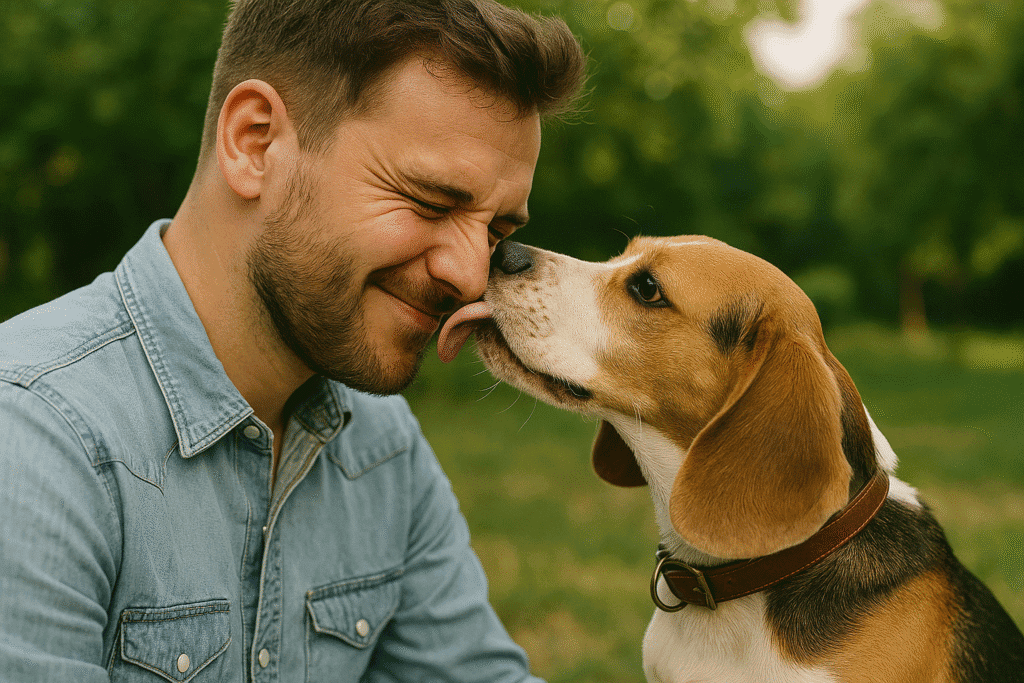
A Behavior + Science Guide for Loving Humans
We buy the good food, choose the soft bed, and kiss the nose a thousand times a day.
But deep down, many dog parents still ask:
“Is my dog truly happy — or just… okay?”
Good news: dogs do show emotional states clearly, once you know what to look for.
This guide combines canine behavior research and real-life observation so you can read your dog’s happiness like a language.
1. The “Happy Dog Face”: Soft Eyes, Relaxed Jaw
A truly content dog wears their emotions on their face.
Look for:
- Soft, almond-shaped eyes (no hard staring)
- Eyelids slightly relaxed or “smiling”
- Mouth gently open, tongue loose, corners of the lips not pulled back tightly
Veterinary behaviorists call this a relaxed affect.
It means: “I feel safe. Nothing hurts. Life is good.”
If the eyes are wide, pupils dilated, whites visible (whale eye), or the mouth is tightly closed, you’re likely not seeing happiness but alertness, stress, or uncertainty.
2. Tail Language: More Than Just Wagging
Not all tail wags are happy. Some are nervous. Some are controlling.
So what does a happy tail look like?
- Neutral to slightly elevated position (not tucked, not rigid straight up)
- Wide, sweeping wag, often with the hips moving too
- Sometimes, the whole back half of the body wiggles
A stiff, high tail with short, sharp wags often signals tension or arousal, not joy.
The “helicopter” tail — huge arcs, maybe full circles — is usually reserved for favorite humans.
3. Play Bows and Silly Zoomies
The classic play bow (front legs stretched forward, bum in the air) is the dog version of:
“I feel so good I want to be ridiculous.”
Happy dogs:
- initiate play with bows
- chase toys, you, or other dogs
- get spontaneous “zoomies” — quick bursts of running with relaxed, curved body movement
Research shows that play behavior increases dopamine and endorphins, chemicals associated with pleasure and well-being.
If your dog never plays, rarely shows curiosity, or seems “shut down,” that’s a red flag for stress, pain, or low mood.
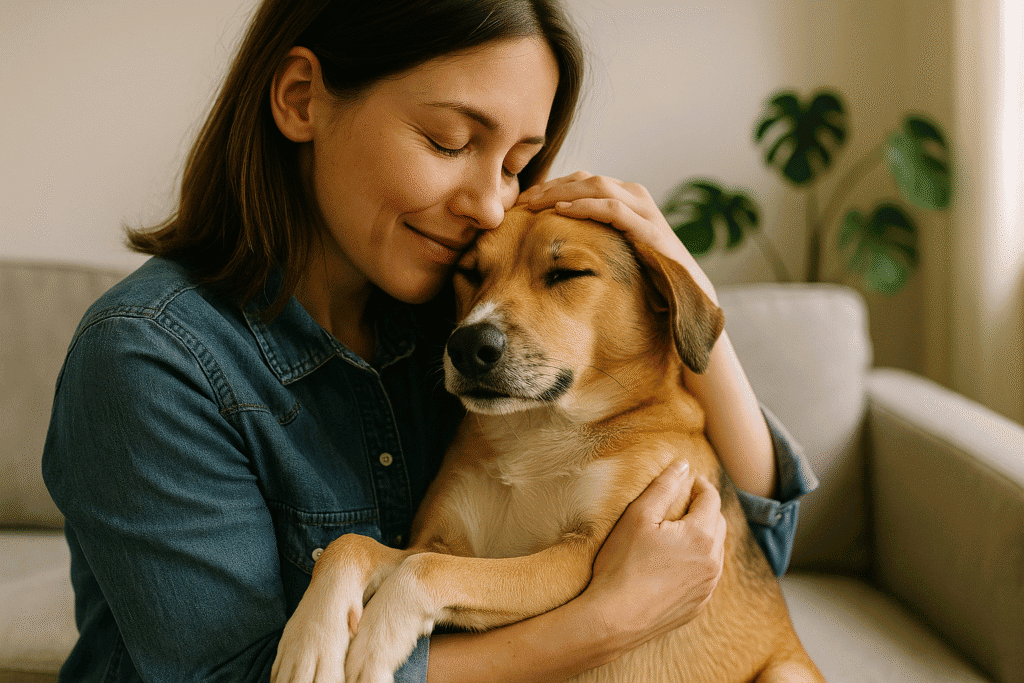
4. They Choose to Be Near You (Without Clingy Panic)
Happy dogs seek proximity, not constant panic contact.
Healthy signs:
- They often lie in the same room, even if not touching you
- They come over for affection, then contentedly settle nearby
- They greet you enthusiastically but can relax again afterwards
If your dog cannot be alone, follows you while panting or whining, or destroys things when you leave, that’s not happiness — that’s anxiety, and they need support, not scolding.
5. A Balanced Appetite and Healthy Sleep
Emotion and physiology are deeply linked.
Happy, well-adjusted dogs usually have:
- consistent interest in meals and treats
- normal stool and digestion
- regular rest (12–16 hours of sleep in 24 hours, including naps)
Lack of appetite, overeating, restless nights, or constant agitation can point to pain, illness, stress, or under-stimulation.
6. Curiosity: The Joy of Sniffing and Exploring
A mentally satisfied dog is curious.
On walks, happy dogs:
- sniff eagerly
- investigate smells, sounds, and sights
- show interest in their environment without constant fear
Sniffing isn’t “wasting time” — it’s how dogs read their world and release stress.
Behavior experts call this enrichment, and it’s a huge component of emotional well-being.
A dog that refuses to move, pulls frantically home, or ignores everything can be overwhelmed, under-socialized, or unwell.
7. Easy, Loose Body Language Around Family
Look at the whole body:
- Muscles relaxed, not rigid
- Spine soft, not straight as a board
- Movements fluid, bouncy, even goofy
This looseness is the physical mirror of emotional relaxation.
If your dog flinches from touch, startles at small noises, or tenses when people approach, listen to that — their body is telling you: “I’m not comfortable.”
8. They Can Settle After Excitement
A truly happy dog isn’t always hyper.
They can go from let’s play to let’s nap without getting “stuck” in over-arousal.
Healthy emotional regulation looks like:
- Excited greeting → then calm within a few minutes
- Play session → then relaxing on their bed
- Walk → then happily chewing a toy, not pacing endlessly
If your dog can’t switch off, it might mean too much stress, not enough structure, or unmet needs.
9. They Engage — But Also Feel Safe Saying “No”
This one surprises people:
A happy dog sometimes says no.
- walks away from petting when they’ve had enough
- chooses a quieter spot when the room is loud
- pauses instead of being forced into interactions
When dogs feel safe, they trust that their choice is respected.
That sense of control is a major component of emotional health in all mammals — including your dog.
10. Vet Check: Happiness Starts With Health
No amount of love can override chronic pain or untreated illness.
Before you assume a behavior is “stubborn” or “moody,” ask:
- Is my dog up to date on vet checks?
- Any changes in movement, weight, coat, or energy?
- Any new stressors at home?
Physical discomfort often shows up as decreased play, irritability, or withdrawal — the opposite of happiness.
How to Make Your Dog Even Happier
If you want to move your dog from fine to truly thriving, focus on three pillars:
- Safety
- predictable routines, gentle handling, consent-based interaction
- Enrichment
- sniffy walks, puzzle feeders, training games, chew options
- Connection
- calm touch, quiet time together, clear communication, patience
Final Thought
Happiness in dogs isn’t just tail wags and treats.
It’s the quiet moments: the soft eye, the gentle sigh as they curl up beside you, the relaxed body that says:
“With you, I’m safe. With you, I’m home.”
If you’re seeing most of the signs in this guide?
Your dog isn’t just okay.
They’re genuinely happy — and you’re the reason why. 🐾